
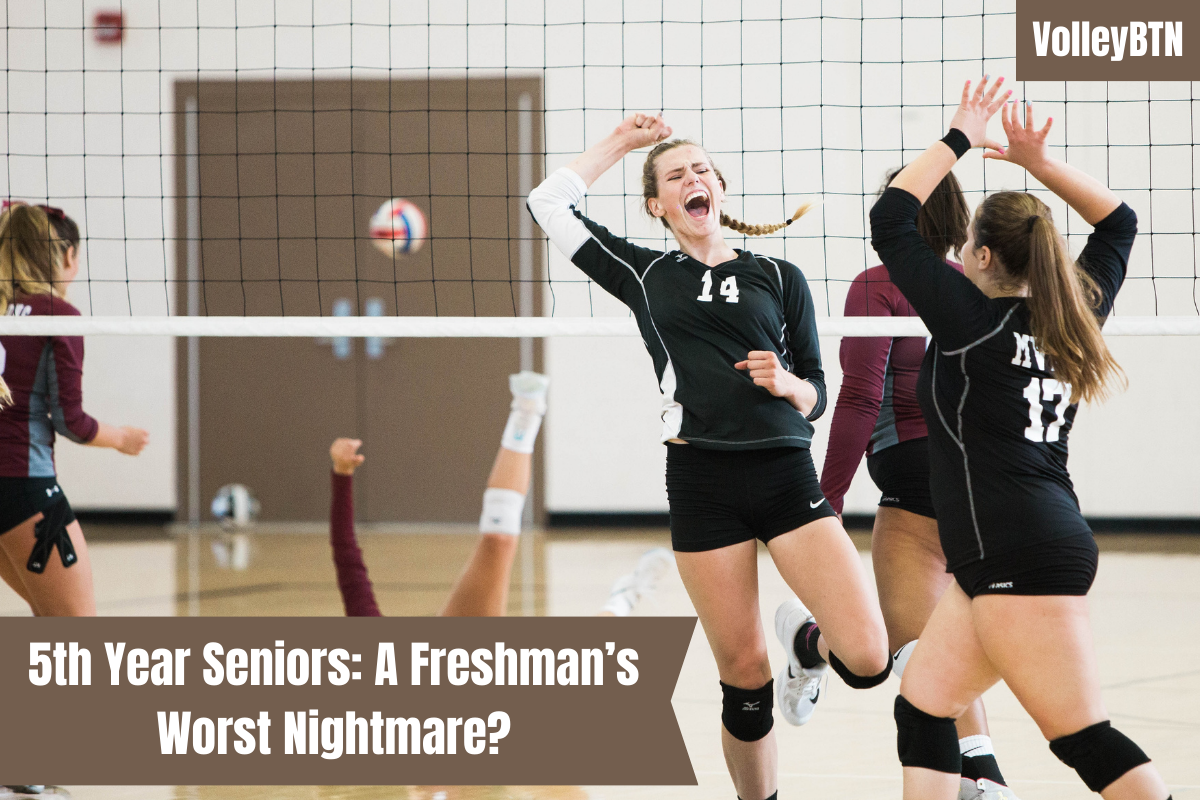
2020 was a year of change for collegiate sports all around the country. Arguably the most significant change was the additional year of eligibility players were given to make up for the loss of the 2020 season. Players were staying for a fifth year of collegiate volleyball, and with the facilitation of the new transfer portal, fifth year seniors had the opportunity and means to pursue one final year of volleyball. This was a really special moment for these young ladies, as well as their volleyball programs, since no one wanted to end their collegiate careers because of Covid. Although this was meant to help the players who were given an extra year of eligibility, it had disruptive effects on collegiate volleyball as a whole, effects that would be felt long after these seniors graduated.

Over the past decade, freshmen have taken up the largest amount of roster spots in Division I volleyball programs (generally about 29%). In 2019, there were, on average, 4.5 freshmen, 4 sophomores, 3.5 juniors, and just over 3 seniors on collegiate rosters. In 2020, there were around 4.25 freshmen, a little less than 4 sophomores, almost 3.7 juniors, and 2.7 seniors. This was the year of the pandemic, and things got a bit wonky, so one would expect for the numbers to iron out in the next couple of years, right? However, in 2021, there were, on average, 4.2 freshmen, 4 sophomores, 3.7 juniors, and a whopping 4 seniors. In 2022, there was another uptick in seniors and fewer than 4 freshmen! In 2019, there were around 1.5 more freshmen than seniors, but after Covid, there were the same number of freshmen as there were seniors. Let’s take a look at why this is.
While the players who decided to use their extra year of eligibility stayed in collegiate volleyball, there was still another round of freshmen coming in, as well. With the transfer portal, however, many coaches turned to it first to look for more experienced, senior players to fill the holes in their rosters. This led to less of a need for freshmen, and less of them got picked up by collegiate programs. The seniors in our dataset account for both 4th and 5th year seniors, which is why there are so many more seniors after 2020. These super seniors took up the remaining roster spots from incoming freshmen, which is why we see a dip in the number of freshmen after 2020.
Freshman, if you are reading this, know that there is still hope. This 2023 season has been the year of the amazing freshmen. I had the privilege of watching both the semifinals and finals in Tampa, and the freshmen were the stars of the show. Both setters in the finals, Ella Swindle and Bergen Reilly, are freshmen running a 5-1. Harper Murray, Andi Jackson, and Laney Choboy were all significant contributors to the Huskers this season. Torrey Stafford and Olivia Babcock, both of whom I got to play against in high school last year (the perks of playing volleyball in Southern California), were six rotation players for Pitt, the latter of whom was the National Freshman of the Year. What I am trying to say is that freshmen are making a comeback like never before, so it will be interesting to see if the data reflects this resurgence of freshmen.
Data Notes:
- With the 2023 season of collegiate volleyball just finishing up, I should be able to scrape, clean and analyze the most recent season of data. This will allow me to update many of my posts and assess whether previous patterns continue and what new trends may be emerging. I hope to get to this soon.
- We have to be a bit careful analyzing 2020 data, since not all teams actually played that season. With the subsequent change in player eligibility due to Covid and the emergence of the transfer portal, there is potentially a lot going on at the same time in the data. There is definitely more that can be worked out in the data that I will discuss in future posts.